
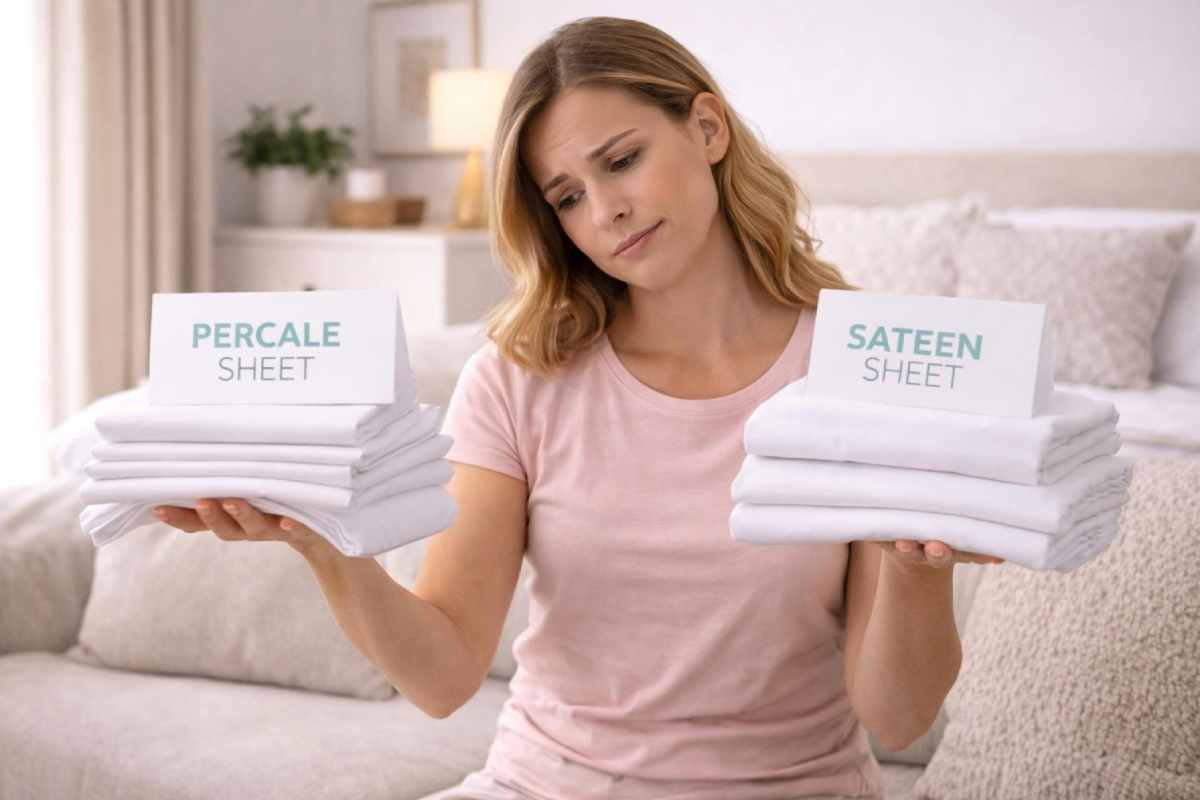
Percale vs sateen sheets represents one of the most important decisions when buying quality bedding. Both weave styles use identical cotton fibers but create completely different sleeping experiences. The weave pattern alone determines how sheets feel against your skin, regulates temperature, and holds up over time.
Many people buy sheets based on thread count or price without understanding weave differences. This leads to disappointment when expensive sheets feel wrong for their sleep preferences. Percale sleepers find sateen too warm and slippery, while sateen lovers find percale too crisp.
Understanding how percale vs sateen sheets differ helps you choose bedding that matches your body temperature and texture preferences. This guide breaks down the technical weave differences and practical implications for your sleep quality.
Table of Contents
What Is The Difference Between Percale And Sateen Weaves?
The fundamental difference between percale vs sateen sheets lies in how yarns are woven together. This structural difference creates distinct properties in finished fabric that affect every aspect of sleeping comfort.
Percale Weave Structure
Percale uses a simple one-over-one-under weave pattern called plain weave or tabby weave. Each horizontal weft thread passes over one vertical warp thread, then under the next. This creates a balanced, symmetrical grid structure with equal thread exposure on both sides.
According to textile engineering research, plain weave produces the most stable fabric structure with maximum thread interlacing. This tight interlacing pattern results in a matte finish and crisp hand feel. The balanced construction means percale sheets look and feel identical on both sides.
Percale requires a minimum thread count of 200 to qualify for the designation. Most quality percale ranges from 200-400 thread count, with 300 being the sweet spot. Higher counts don’t necessarily improve percale quality because the tight weave already maximizes durability.
Sateen Weave Structure
Sateen employs a four-over-one-under weave pattern that exposes more thread surface on one side. Each weft thread floats over four warp threads before dipping under one. This creates long thread “floats” that catch and reflect light differently than percale.
The extended floats produce sateen’s signature lustrous sheen and silky-smooth texture. However, this means fewer interlacing points per square inch compared to percale. The weave creates distinct front and back sides, with the smooth side featuring visible sheen.
Sateen typically requires higher thread counts than percale, usually starting at 300 and ranging up to 600. The higher count compensates for fewer interlacing points, maintaining adequate fabric strength despite the looser weave structure.
How Do Percale Vs Sateen Sheets Feel Different?
Texture represents the most immediately noticeable difference when comparing percale vs sateen sheets. Your personal texture preference should heavily influence which weave you choose.
Percale feels crisp, cool, and matte against skin. The texture resembles a freshly pressed dress shirt with a clean, structured hand feel. Many describe percale as having a “hotel sheet” quality with a smooth but not slippery texture. The fabric provides light resistance when you move, creating a secure feel.
Sateen feels buttery-soft, silky, and slightly slippery. The surface glides smoothly across skin with minimal friction. This luxurious drape resembles satin despite being 100% cotton. Some people love the sensuous feel while others find it too slick for comfort.
Both textures soften with washing but maintain their characteristic differences. Percale remains crisp while becoming slightly less stiff. Sateen maintains its smoothness while developing an even softer hand feel over time.
Quality bedding in either weave softens beautifully with proper care while maintaining structural integrity through hundreds of washes.
Which Weave Is Better For Hot Sleepers?
Temperature regulation varies significantly between percale vs sateen sheets due to their different weave structures. This makes weave selection particularly important for hot sleepers who struggle with night sweats.
Percale offers superior breathability for hot sleepers through its tight plain weave. The balanced thread structure creates consistent micro-gaps that allow continuous airflow through fabric. Heat and moisture escape easily rather than being trapped against your body.
Research published in Textile Research Journal demonstrates that plain weave fabrics provide better air permeability than satin weaves at equivalent thread counts. This translates directly to cooler sleeping temperatures for percale users.
Sateen traps more heat due to its dense thread floats and tighter surface. The smooth finish reduces air circulation while the heavier fabric weight retains warmth. Hot sleepers often wake up sweaty in sateen sheets despite cotton’s natural breathability.
Key cooling factors for percale sheets:
Open weave structure maximizes airflow between threads
Lighter fabric weight releases heat faster than heavier sateen
Matte surface doesn’t trap heat like sateen’s dense floats
Moisture wicks away more efficiently through a balanced weave
Cold sleepers who want extra warmth may actually prefer sateen’s heat-retaining properties. The cozy feel and warmth work beautifully in air-conditioned rooms or in the winter months.
How Durable Are Percale Vs Sateen Sheets?
Durability differences between percale vs sateen sheets stem directly from their weave construction. Understanding longevity helps justify investment in quality bedding that lasts for years.
Percale wins the durability contest through its maximum interlacing structure. Every thread crosses alternately, creating a stable fabric that resists pilling, snagging, and tearing. The tight weave distributes stress evenly across the entire fabric surface. Quality percale sheets commonly last 10-15 years with proper care.
Sateen shows wear faster due to its exposed thread floats. The long surface threads are vulnerable to abrasion, friction, and snagging during normal use. Pills form more readily where the thread floats break down from rubbing. Sateen typically lasts 5-8 years before showing significant wear.
According to consumer textile studies, plain weave fabrics demonstrate superior tear strength and abrasion resistance compared to satin weaves. This scientific backing confirms what long-term users experience with their sheets.
However, sateen’s shorter lifespan doesn’t mean it’s of poor quality. The weave naturally trades some durability for exceptional softness. Many people happily replace sateen sheets more frequently to maintain that luxurious feel.
Proper care extends both weave types significantly beyond average lifespans. Quality materials combined with gentle washing preserve fabric integrity much longer than rough handling.
What Are The Care Requirements For Each Weave?
Care requirements differ slightly between percale vs sateen sheets due to their structural differences. Following proper washing guidelines preserves texture and extends the lifespan for both weaves.
Both percale and sateen wash well in cool to warm water with mild detergent. Avoid hot water which can break down cotton fibers prematurely. Skip fabric softener entirely as it coats fibers and reduces both breathability and absorbency.
Percale tolerates rougher handling than sateen through its stable weave structure. You can wash percale with other items and use normal dryer settings. The crisp texture actually improves slightly with mechanical agitation from washing and drying.
Sateen requires gentler handling to protect delicate thread floats from damage. Wash sateen separately or with similar delicate items to prevent snagging. Use lower dryer heat or line dry to preserve the smooth finish and prevent excessive pilling.
Essential care tips for both weaves:
- Wash every 1-2 weeks to prevent oil and sweat buildup
- Use the gentle cycle for sateen, the normal cycle for percale
- Remove from dryer promptly to minimize wrinkles
- Avoid bleach which weakens cotton fibers over time
- Rotate multiple sheet sets to reduce wear on any single set
Quality towels follow similar care principles, with fabric structure determining specific washing requirements for longevity.
Which Should You Choose: Percale Or Sateen?
Choosing between percale vs sateen sheets depends on your sleep temperature, texture preferences, and practical considerations. Neither weave is objectively better, but one will suit your needs better than the other.
Choose percale if you sleep hot, prefer crisp textures, want maximum durability, or enjoy that classic hotel sheet feel. Percale works beautifully year-round but particularly shines in warm weather or for naturally warm sleepers.
Choose sateen if you sleep cold, love silky-smooth textures, prioritize luxury feel over longevity, or want cozy warmth. Sateen excels in air-conditioned environments or cooler months when extra warmth feels comfortable.
Some people keep both weave types and rotate seasonally. Percale for summer months provides cooling comfort, while sateen for winter offers cozy warmth. This approach maximizes comfort throughout changing seasons. Visit Miracle Made for premium bedding options that combine quality weaves with innovative fabric technologies for better sleep.
